
The AI behind every accurate count
Nano doesn't just detect movement — it uses on-device computer vision to understand what's actually happening at your doorway. Here's how the AI works, what it does and doesn't see, and how it's different from older counting technology.
Ask Us a Technical QuestionWhat The AI Actually Does
Five jobs the model handles in real time
Object detection
Every frame is scanned to detect people as distinct 3D objects, using depth rather than colour or brightness — so it keeps working in low light, backlight, or when everyone is wearing the same uniform.
Person vs. non-person classification
The model separates people from trolleys, prams, pets and delivery equipment, so your traffic counts reflect actual visitors rather than everything that moves through the doorway.
Staff & repeat-pass exclusion
Known staff badges and people who walk back and forth near an entrance (browsing, chatting, stepping outside) are recognised and excluded from the visitor count automatically.
Queue & dwell detection
By tracking how long a detected person stays within a defined zone, the same model that counts entries can also flag a queue forming or a zone attracting unusual dwell time.
Anomaly flagging
Sudden spikes, drops, or unusual patterns compared to your historical baseline are flagged in BoostBI so you can investigate — a locked door, a broken sensor, or a genuinely huge trading day.
Trend forecasting
Once enough history has built up, the same data trains simple forecasting models that estimate next week's likely peak hours, to support rostering decisions in BoostBI.
Why It's Better
AI sensing vs. older counting technology
| Capability | Infrared beam counter | Basic thermal counter | Nano (AI + depth sensing) |
|---|---|---|---|
| Typical accuracy | 70–85% | 85–90% | 99% |
| Separates people walking side-by-side | No | Limited | Yes |
| Excludes trolleys, prams & pets | No | No | Yes |
| Excludes staff & repeat passes | No | No | Yes |
| Works in variable lighting | Yes | Yes | Yes |
| Zone / dwell / queue analytics | No | No | Yes |
| On-device privacy processing | N/A | Partial | Yes |
Figures for infrared and thermal counters reflect typical industry ranges reported for those technologies, provided for context rather than as a test of any specific competing product.
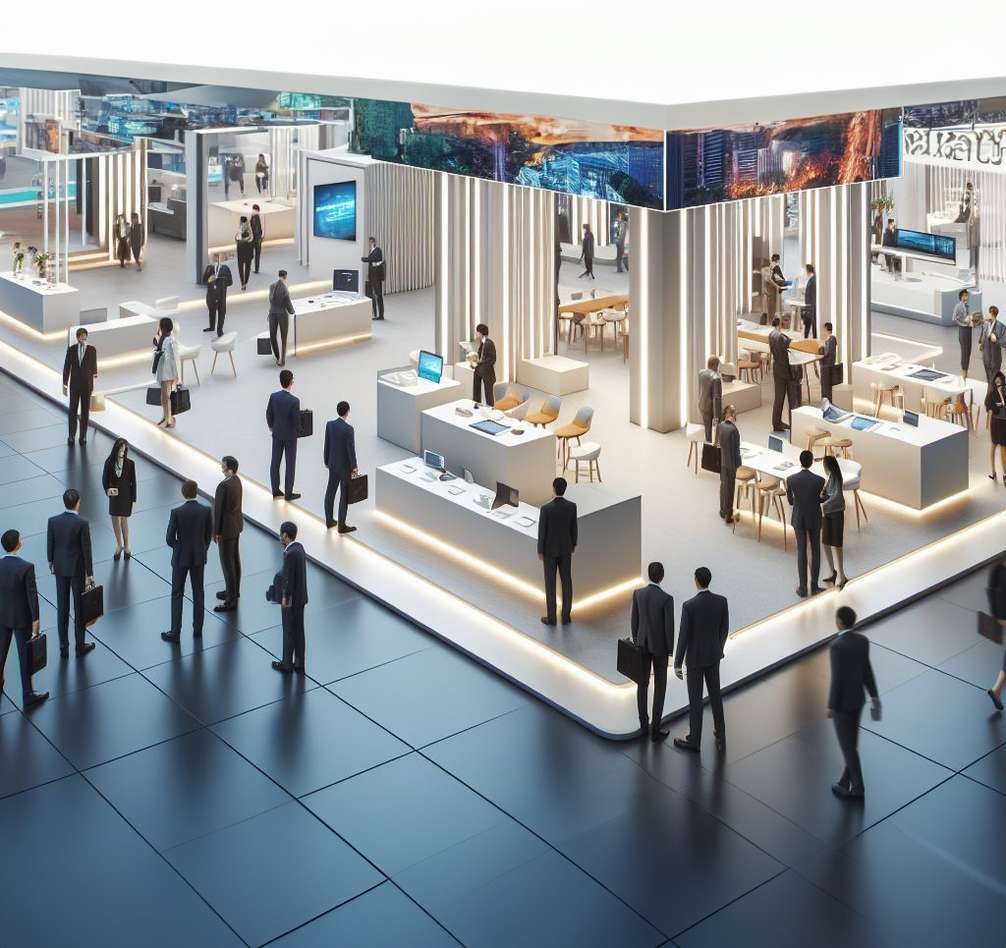
The same AI models we demo, live, at every install
How the model earns its accuracy rating
Depth-sensing AI models like the one running on Nano are trained on large volumes of real-world doorway footage — different heights, walking speeds, group sizes, lighting conditions and entrance widths — so the model generalises to your specific site rather than a single lab setup.
Accuracy is then validated the way it matters to you: by manually counting a live doorway over a representative period and comparing it against the sensor's automated count. That's where the 99% accuracy figure comes from, and it's the same standard we hold every Nano installation to.
Because detection happens on-device, the model keeps learning to separate genuine visits from noise (a door propped open in the wind, a reflection, a delivery trolley) without ever needing to send raw video anywhere for processing.
Responsible AI
What the AI does not do
No facial recognition or identification
The model detects the presence and shape of a person to count them — it is not designed to identify who that person is, and no facial recognition takes place.
No video leaves the device
Detection and counting happen entirely on the sensor itself. Only anonymous, aggregated numbers — a count, a zone, a timestamp — are transmitted to BoostBI.
No data resale
Your traffic data belongs to your business. It's used to power your own BoostBI reporting and nothing else.
Built with Australian Privacy Principles in mind
Anonymous, on-device counting is designed to minimise the personal information collected in the first place, in line with the data minimisation approach encouraged under Australia's privacy framework.
AI & Technology FAQs
Does the AI record or store video of my customers?
No. Video frames are processed on the sensor in real time to detect and count people, then discarded. Only anonymous count data is sent to BoostBI — no video or images are stored or transmitted.
Can the AI tell the difference between adults and children?
The depth-sensing model detects people of all heights, including children, as part of the overall visitor count. Detailed demographic breakdowns are not a standard feature of the current Nano sensor — ask our team if this is a specific requirement for your business.
Does the AI need an internet connection to work?
No. Detection and counting run entirely on the sensor itself, so it keeps counting accurately even if your internet connection drops, then syncs the data to BoostBI once connectivity returns.
How does the AI stay accurate over time?
The underlying detection model is validated against manual counts during installation and periodically afterwards. Because the sensing approach is based on physical depth measurement rather than a constantly-shifting visual model, accuracy doesn't drift the way a purely camera-based system might over time.
Curious how the AI performs at your site?
Talk to our team about your specific doorway, lighting and layout — we'll tell you honestly what accuracy to expect.